What Harvesting Potatoes Taught Me About Turning Everyday Experiences Into Stories
What Harvesting Potatoes Taught Me About Turning Everyday Experiences Into Stories
Oct 08, 2026
What the hell does harvesting potatoes have to do with communication?
Quite a bit, actually.
Yesterday, I was out harvesting potatoes, filming little clips along the way. Shovel going into the ground, potatoes coming out, rows of freshly dug potatoes, washing them, drying them, and eventually getting them ready for the root cellar.
And somewhere along the way, I started thinking about public speaking.
Yes, potatoes and public speaking.
Stay with me. 😂
Five Steps to Harvesting Potatoes
There's a bit more to harvesting potatoes than just digging them out of the ground.
1. Dig them up.
First, you have to find them. Sometimes you dig, and there's nothing. Other times, you uncover what feels like buried treasure.
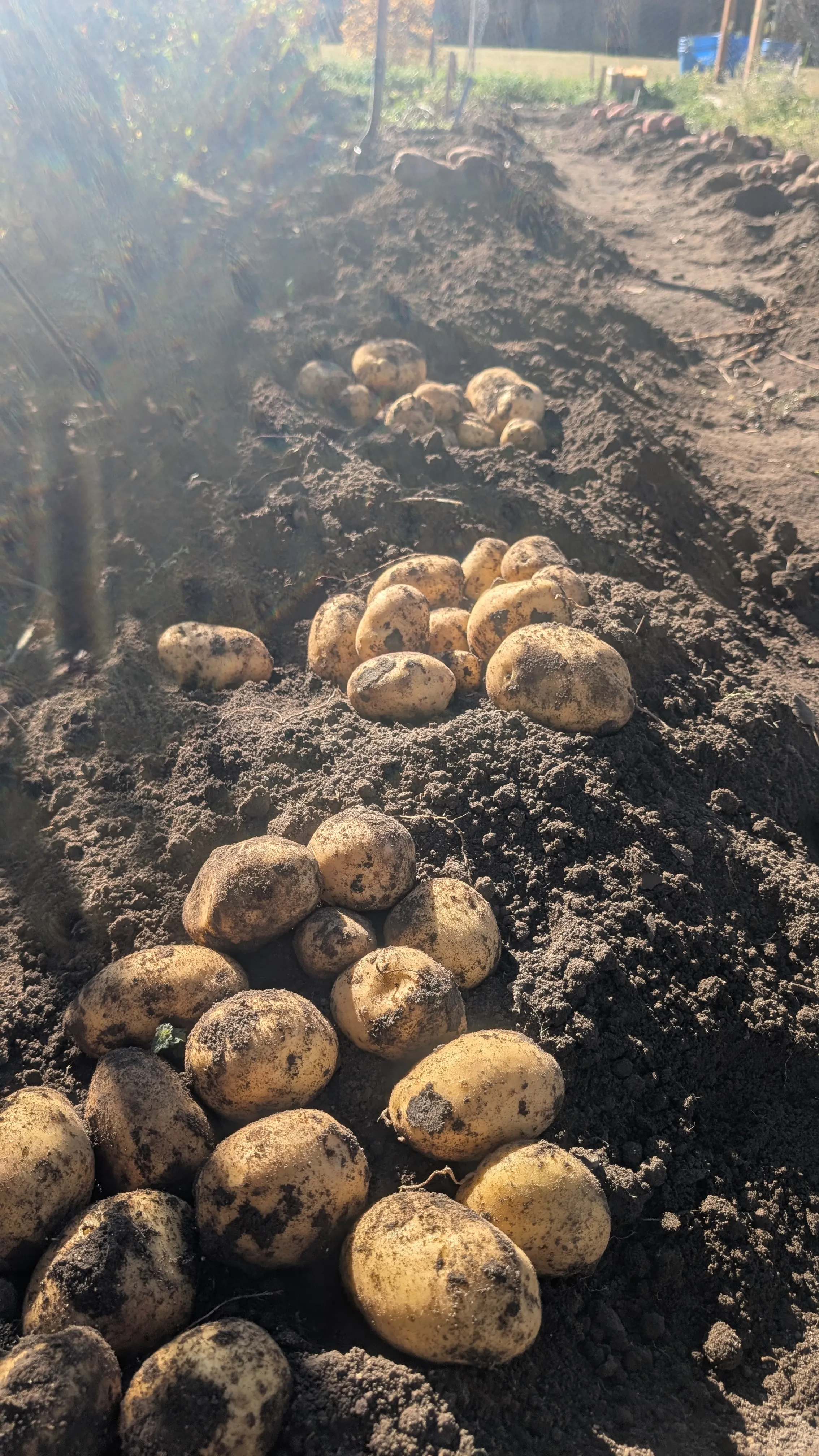
2. Admire your work.
Once they're all out of the ground, there's something satisfying about seeing those rows of potatoes.
You didn't know exactly what was down there until you started digging.
3. Wash them.
We wash ours, although apparently not everyone does. In fact, many people prefer to store potatoes unwashed.
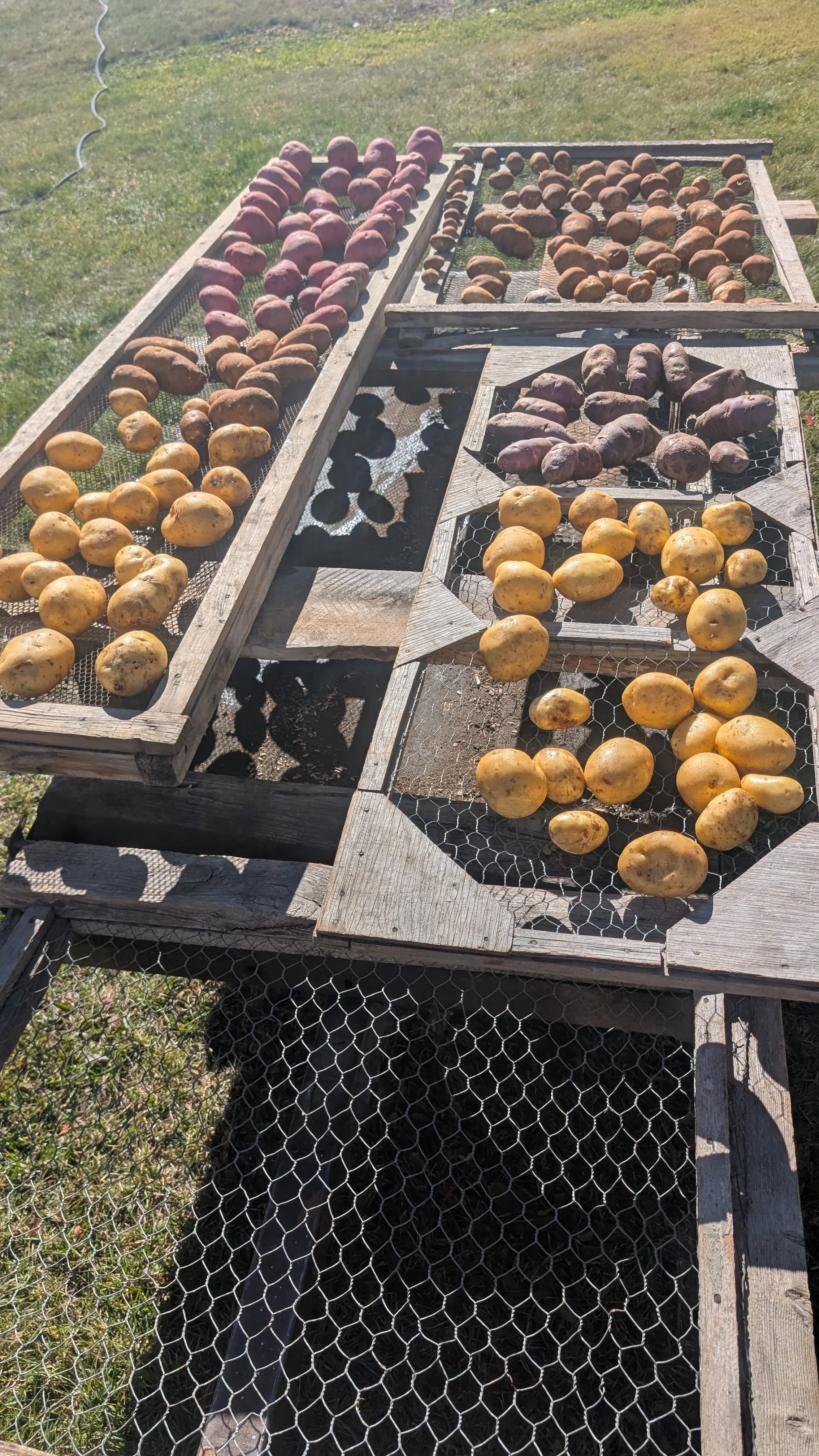
4. Dry them.
We let ours dry in the shade so they don't get too warm before going into storage.
5. Store them.
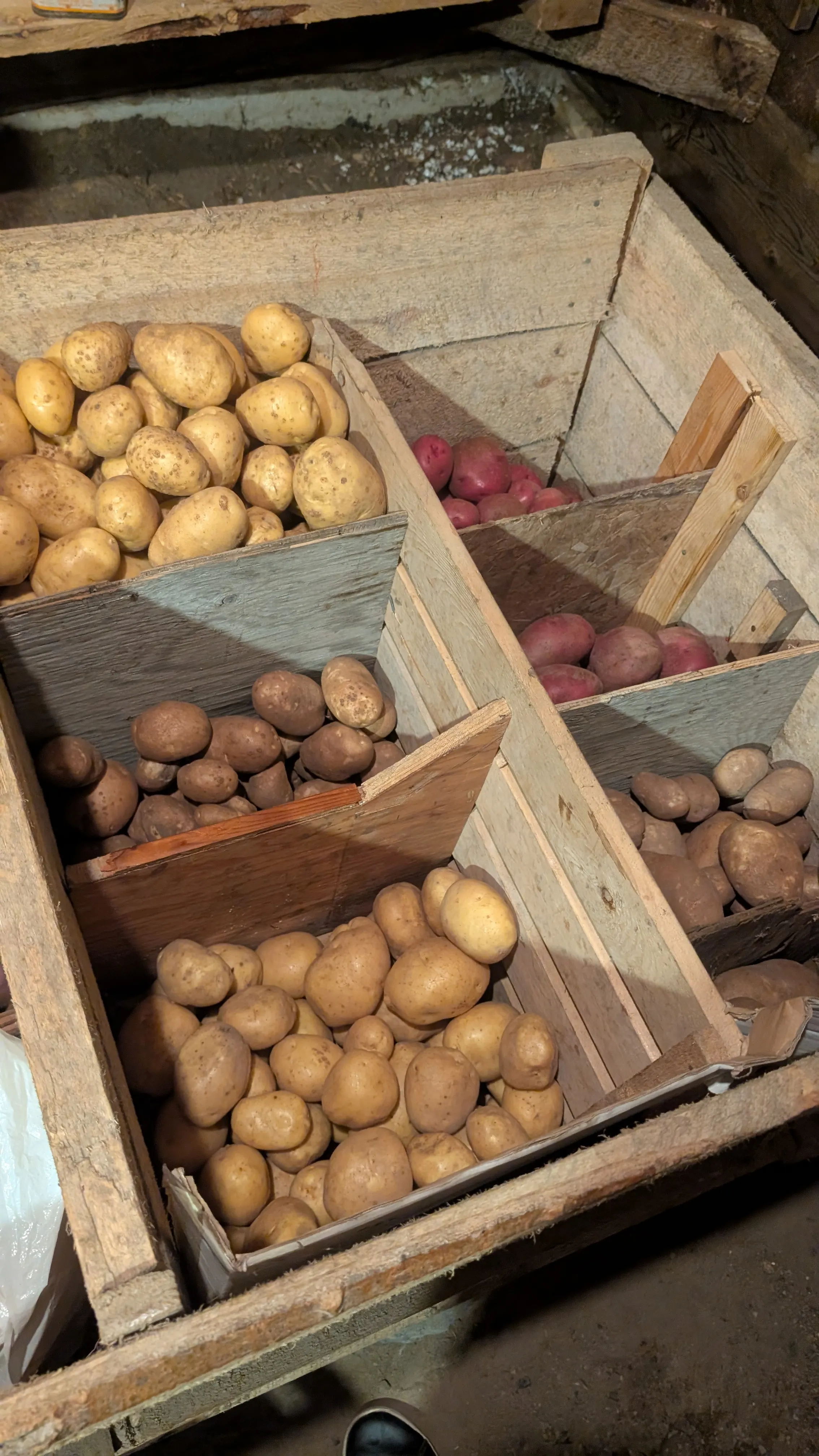
Finally, into the root cellar, where we aim to keep them around 2–3°C.
Why go through all this trouble?
Because those potatoes aren't just for today.
We're saving them for when we need them.
And that's where communication comes in.
You're Sitting on a Goldmine of Stories
Think about how many things happen to you in a single week.
Conversations with coworkers. Problems you've solved. Mistakes you've made.
Something your kids said that made you laugh. An unexpected lesson you learned while digging potatoes.
Every one of those experiences could contain a story worth telling.
But what happens to most of them?
We forget them.
We're busy.
We've got meetings to attend, projects to finish, families to spend time with, and a hundred other things competing for our attention.
So we tell ourselves we'll remember that great story.
And then we don't.
A few weeks later, you're sitting in a meeting, delivering a presentation, or trying to explain something important.
You know you've experienced something that would make a great example.
You just can't remember what it was.
Sound familiar?
Why So Many Smart People Struggle to Find the Right Words
I've worked with thousands of people on their public speaking and communication skills.
And one of the things I hear all the time is some version of: "I'm terrible at speaking."
Of course, they usually use a lot more words than that.
They tell me they ramble, can't think on their feet, struggle to explain their ideas, or sound nothing like themselves when they're presenting.
But here's something I've learned.
Sometimes the problem isn't that you have nothing worth saying. It's that you haven't saved the things worth saying.
You have years of experience.
You've overcome problems. Learned lessons. Made decisions. Seen things that other people haven't.
That's valuable material.
And you're leaving it buried in the ground.
Great Speakers Collect Stories Before They Need Them
Professional speakers don't just magically remember every brilliant story they've ever experienced.
Many of them collect stories, observations, examples, jokes, and ideas.
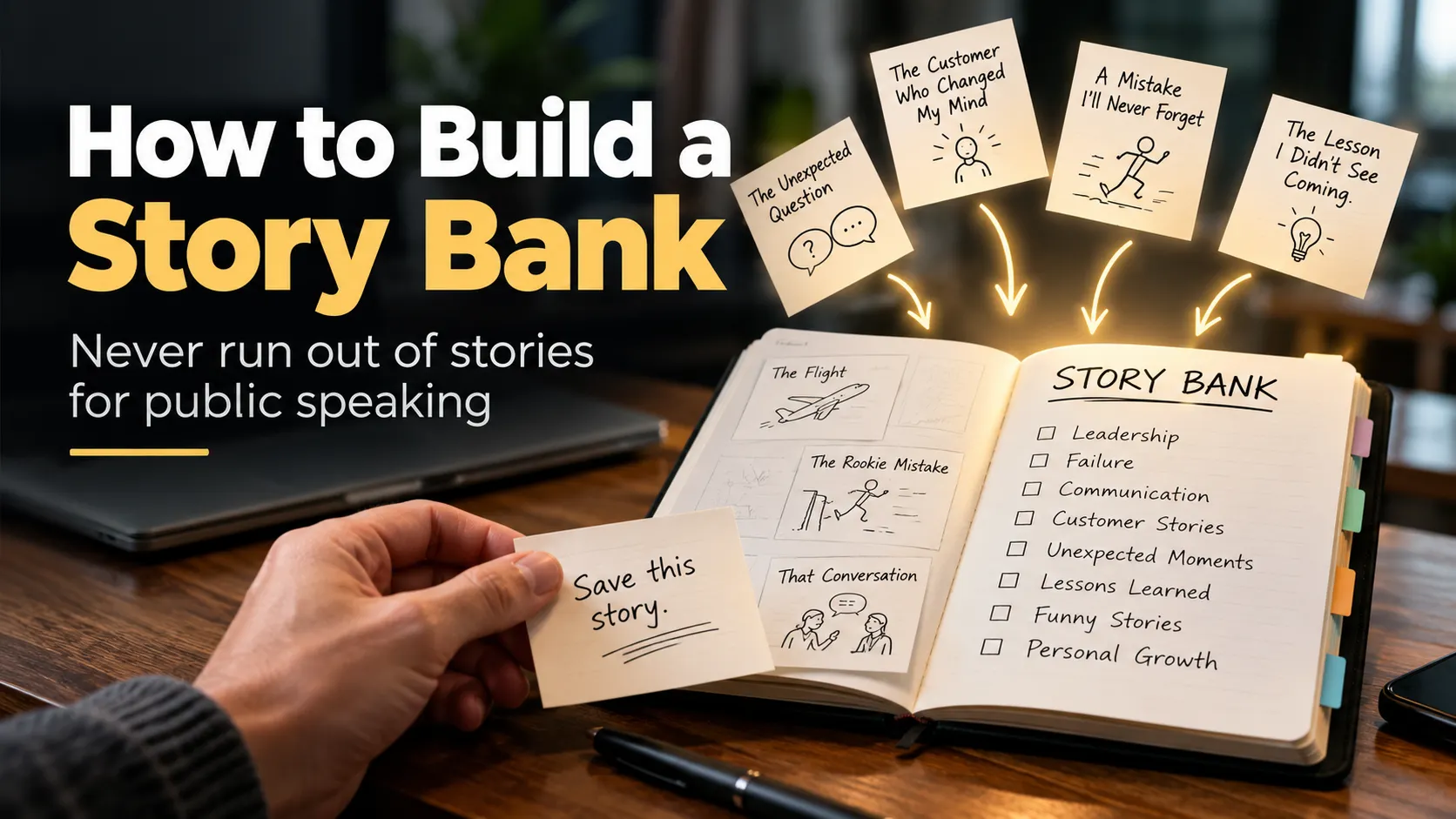
They build what I call a Storybank.
Think of it like your root cellar.
Every time you experience something worth remembering, you put it away.
Not because you need it today.
But because one day, you might.
And when that moment comes, you're not scrambling to invent a story.
You've already got one.
You can read more about the process in my article, How to Build a Story Bank: Never Run Out of Stories for Public Speaking.
How to Turn Everyday Experiences Into Stories
Here's something you can start doing today.
Whenever something interesting happens, ask yourself three questions:
- What happened?
- What did I learn from it?
- When could I use this story?
That's it.
You don't need to write a novel.
A few sentences are enough to help you remember the experience later.
Over time, you'll build a collection of stories that you can pull from during meetings, presentations, training sessions, conversations, or even when someone unexpectedly asks for your opinion.
And the more you collect, the more you'll start noticing stories all around you.
Even while harvesting potatoes.
Want to Build Your Own Storybank? I'm Building Something for That.
I've been working on an app called Speaker Journey.
One of its features is a Storybank where you can collect your experiences, save lessons, and start building your own library of speaking material.
But that's only part of it.
I'm also developing tools that help you practise speaking, get feedback, and improve your communication skills through actual practice.
Not just watching more videos about how to communicate.
Actually doing it.
We're inviting FREE beta testers to help shape the app.
If you'd like to be one of them, you can join the waitlist here:
Your Stories Are Worth Preserving
Potatoes have helped sustain populations through difficult winters and periods of food scarcity.
They're valuable because we can grow them, preserve them, and use them when they're needed.
That's how I think about stories.
Your experiences might not seem particularly important today.
But the right story, told at the right time, could change how someone understands an idea, remembers your message, or connects with you.
So don't let those stories disappear.
Collect them. Save them. And when the time comes, use them.
And now I'm curious.
What's the strangest everyday experience that's taught you something valuable?
You know where the best place to log that story is...
In an App on your phone!
One that I'm creating just for users like you.
Get in on the BETA program by following this link: https://get.devinbisanz.com
— Devin Bisanz
P.S. In my next video, we're talking about AI and something that concerns me: how relying on it to do all your thinking could eventually put your career at risk. Subscribe to the YouTube channel so you don't miss that conversation.